What Does a Proper Website Revamp Actually Include? 8 Areas to Improve
What Does a Proper Website Revamp Actually Include? 8 Areas to Improve
Key Summary
A website revamp should improve far more than the appearance of your website. For Singapore businesses, a good website needs to communicate your value clearly, help customers find information quickly, perform well on mobile, support Google visibility, protect your business, and make enquiries easier.
In this guide, MIBC looks at 8 areas a proper corporate website revamp should improve, and more importantly, what business owners should expect to achieve from each improvement.
Introduction
A website that’s online, functional, and reasonably good-looking isn’t necessarily doing its job. Businesses evolve, and a website revamp exists to close the gap between where your business is now and what your website was originally built for. Services expand, target customers shift, marketing strategies change, and competitors sharpen their digital presence, so a website that worked well a few years ago may no longer reflect the business you’re actually running today. A working contact form and an acceptable homepage are the minimum bar, not proof the site is performing.
The right way to start a website revamp is by asking one question: what should work better after the revamp? For a Singapore SME, that could mean helping customers understand your services faster, improving mobile usability, making key information easier to find, strengthening Google visibility, or creating a smoother path from website visitor to enquiry. Defining this upfront turns the revamp from a cosmetic refresh into a project with a measurable business outcome.
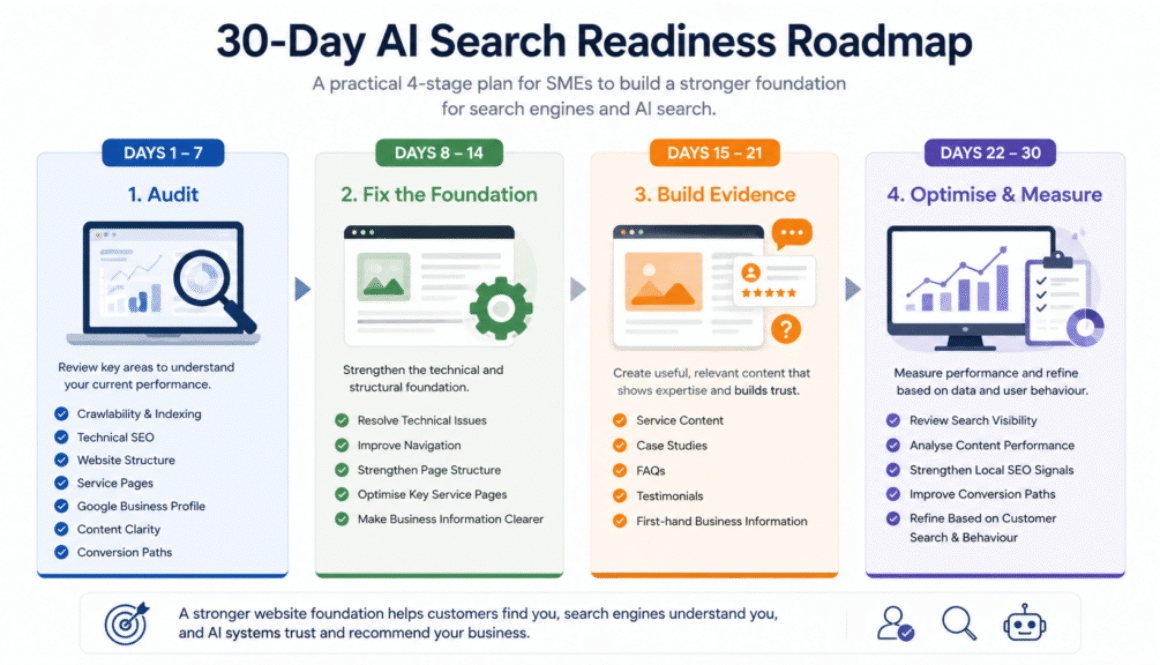
A proper website revamp should follow four steps: audit, prioritise, improve, and measure. The audit identifies where the current site is underperforming, prioritisation focuses effort on what matters most to the business, improvements are made against those specific priorities, and measurement confirms whether the revamp actually achieved its goal. This structured approach avoids applying the same generic checklist to every website, and instead targets the changes that will move the needle for your specific business.
What Should a Proper Website Revamp Improve?
1. Website Structure
Website structure is simply how your information is organised, and it has a bigger impact than most business owners expect. When every service, product, and detail gets crammed under a handful of generic pages, visitors are left guessing whether you actually offer what they’re looking for. A revamp gives you the chance to sort everything into categories that actually make sense, with clearer relationships between related pages. Beyond making the site easier to browse, this also strengthens internal linking and gives search engines a cleaner map of your business.
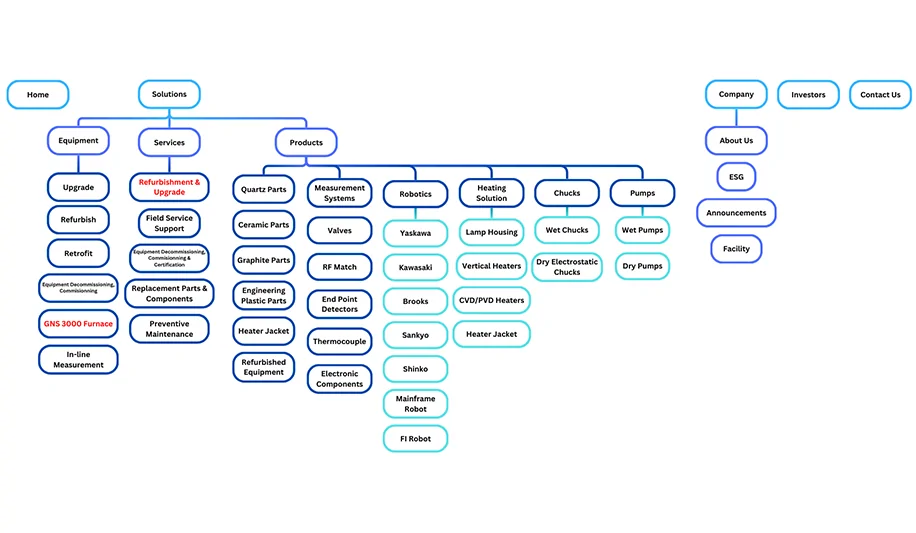
Case study: Global Tech Solutions
Before the redesign, Global Tech’s website ran on just four pages: Home, About Us, Services, and Contact. There was no deeper navigation or logical grouping underneath, so visitors had no real way to explore specific service categories or product types. For a business with a genuinely wide range of solutions, the site made everything look flat and generic, which meant the user journey never reflected the depth of what Global Tech actually offered.
The revamp introduced clear top-level pages such as Solutions, Products, Company, and Investors, with related content properly grouped underneath; for example, Equipment and Services sitting together, and robotics brands like Yaskawa and Brooks organised under their own category. This hierarchy gave both users and search engines a much clearer path through the site, making it easier for visitors to find what they needed and for internal links to actually support discovery instead of working against it.
Business outcome: customers understand what you offer faster, and they don’t need five clicks to find something that should have taken one.
2. Navigation
Good navigation answers one question a visitor is silently asking on every page: “Where do I go next?” Your menus, categories, and internal links should carry someone naturally from general browsing toward the specific service, case study, or contact page they actually need. This matters even more if you serve multiple customer segments or offer a wide range of services, since a poorly planned menu forces visitors to do the work your website should be doing for them.
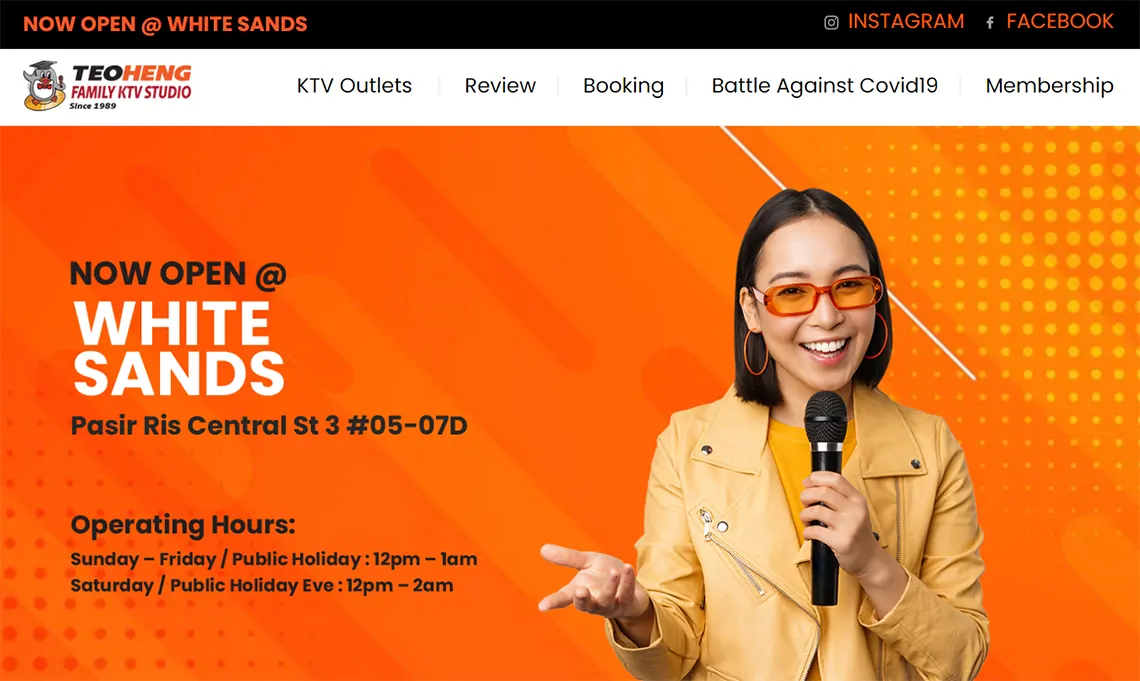
Case study: KTV Teo Heng
We started by listening to what customers were already saying, going through Facebook and Instagram comments to understand where the friction actually was. The pattern was clear: customers were struggling to book karaoke rooms over the phone, with no simple way to see availability or confirm a booking without back-and-forth calls.
The fix wasn’t just a booking form bolted onto the old site. We built a systemised structure that let customers and staff manage room bookings and vouchers directly through the website, with generic, reusable content blocks that route visitors naturally to each page instead of dead-ending them. The site is also kept continuously updated to notify customers whenever a new outlet opens, so navigation reflects the business as it actually grows, not a snapshot from whenever the site was last touched.
Business outcome: less friction in the customer journey, and more visitors sticking around long enough to explore.
3. Mobile Experience
If your website only feels “finished” on a desktop screen, it’s not finished. Mobile devices already account for 63% of global web traffic, which means most people are meeting your business on a phone screen, not a laptop. Text needs to stay readable, buttons need to be easy to tap, and menus need to actually work when someone’s browsing during a commute or between meetings. A revamp is the right time to treat mobile as its own complete journey, not just a shrunk-down version of the desktop layout.
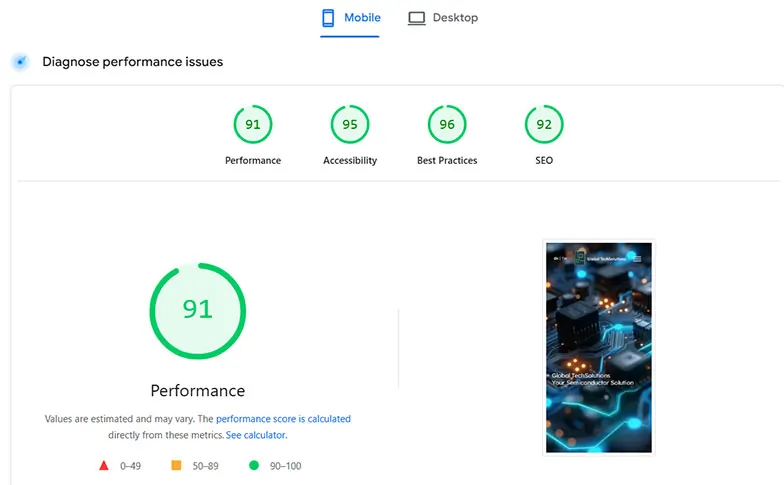
Case study: Global Tech Solutions
Before the redesign, the site was slow across every device, and mobile felt it the most. High blocking time and delayed interactivity meant visitors were often stuck waiting before they could even tap a button, which is exactly the kind of friction that pushes mobile visitors to leave before they’ve seen anything.
The revamp brought the site up to a 91/100 speed score, with noticeably faster load times on both mobile and desktop and interactivity that finally feels smooth and stable instead of sluggish.
Business outcome: a smoother experience for mobile visitors, and fewer barriers between discovering the business and actually sticking around long enough to engage.
4. Content & Messaging
A visitor should be able to tell what you do, who you serve, and why you’re worth considering within seconds of landing on your site. During a revamp, content deserves the same scrutiny as structure. Headlines, service descriptions, calls to action, and supporting copy should all speak to what a customer actually needs to know before they decide to reach out, not what sounded good when the page was first written.
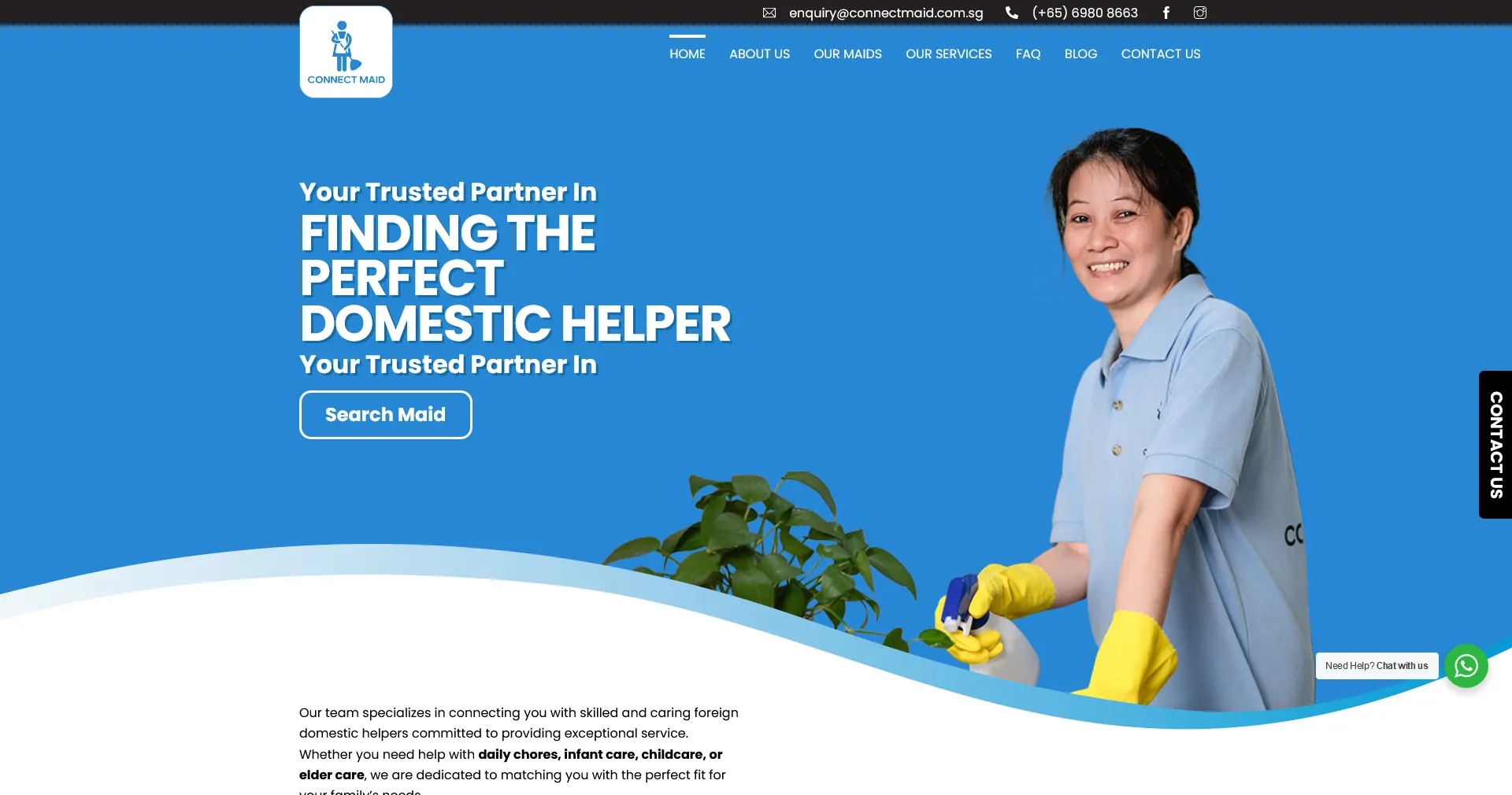
Case study: Connect Maid
The original site struggled on almost every front that matters for content and messaging. Minimal copy, confusing navigation, and a design that wasn’t mobile-friendly all worked against building any real credibility with visitors, let alone convincing them to reach out.
MIBC rebuilt the site with a fully responsive design that works properly across devices, restructured the content layout and navigation so information is easier to follow, strengthened the calls to action to actually drive conversions, and migrated the site to faster, more secure hosting.
Business outcome: visitors get a clearer, more credible picture of the business within seconds, with stronger reasons to keep exploring and reach out.
5. Trust & Credibility
People don’t hand over their time or money without some proof first. Testimonials, case studies, certifications, client work, and company background all do the job of reassuring a hesitant visitor. What often gets missed is where these trust signals sit. A relevant case study placed right on a service page does far more than one buried on a separate “About Us” tab visitors may never find.
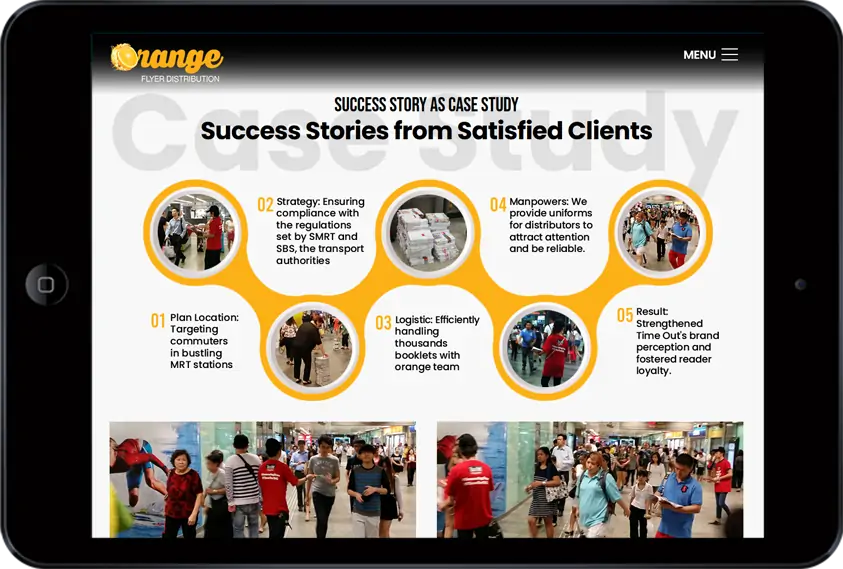
Case study: Orange Flyer Distribution
Before the redesign, Orange Flyer Distribution’s website did little to build trust with visitors. The brand image felt outdated and forgettable, the banner had no real interactivity, and the messaging never connected with the emotional side of a customer’s pain points. Content leaned heavily on promoting packages rather than actually explaining the solutions on offer, which left the site looking generic in a competitive market and gave visitors little reason to believe this business stood out.
The redesign used an AI-driven approach to rebuild the brand story from the ground up, starting with a curated mood board that aligned the visual identity with what the target audience actually responds to. The centrepiece was a rebuilt landing page with AI-enhanced content that clearly presents the company’s unique selling points, positioning Orange Flyer Distribution as an authority in flyer distribution rather than just another vendor listing packages.
Business outcome: greater confidence when potential customers evaluate the business, backed by proof that’s actually visible where it matters.
6. SEO Foundation
Your website needs to make sense to people, but it also needs to make sense to Google. Page structure, headings, internal links, and relevant keywords all shape how clearly search engines understand what your business actually offers. This is exactly why SEO can’t be an afterthought in a revamp. Restructuring pages without considering search visibility is a common way businesses accidentally lose the rankings they already had.
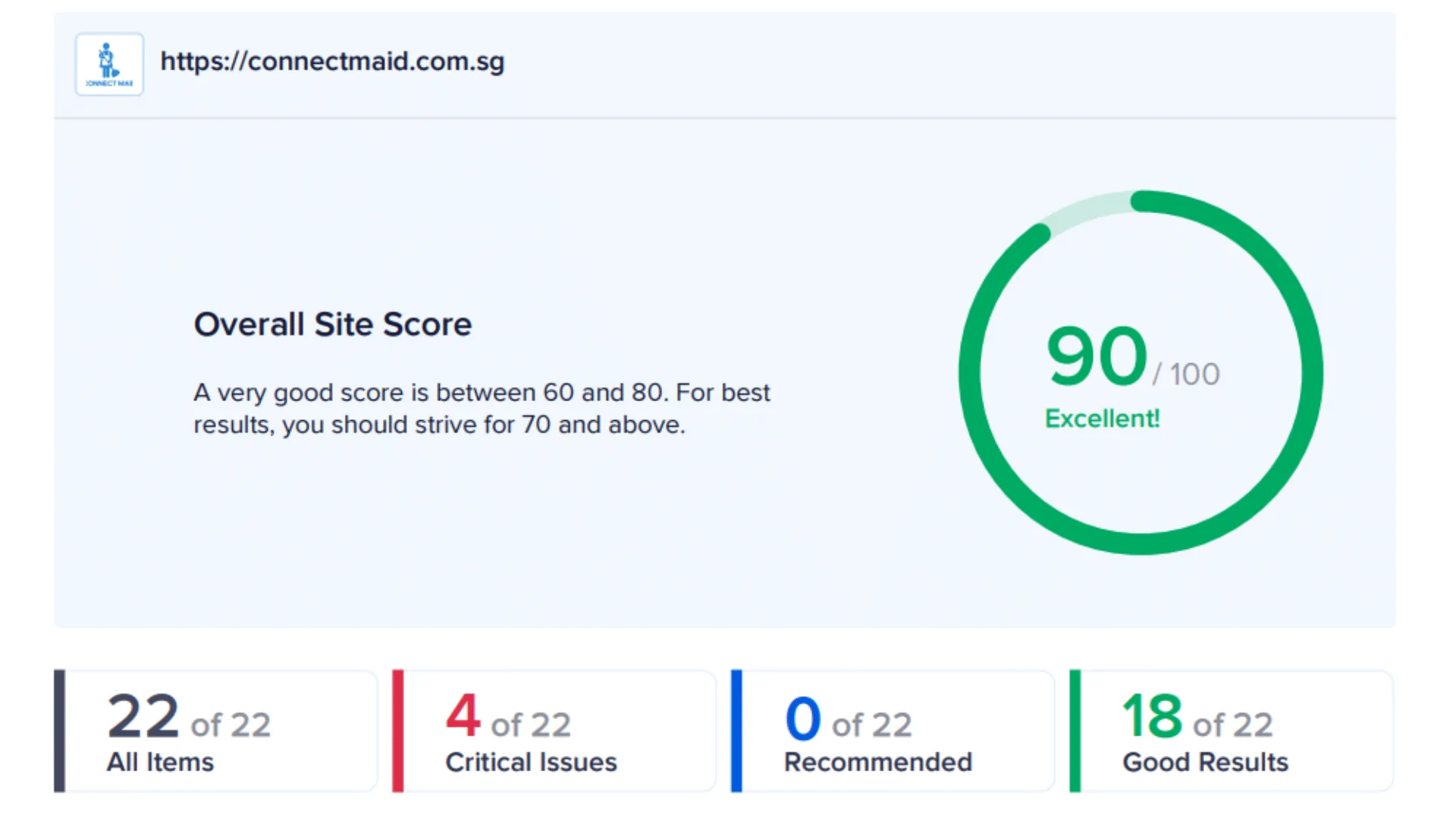
Case study: Connect Maid
Before the revamp, the site’s SEO audit score sat at just 51/100, with 11 critical issues and only 11 out of 22 checks passing. Technical gaps and unresolved structural inconsistencies were quietly working against the site, limiting how well search engines could crawl it, understand it, and ultimately trust it enough to rank it.
After optimisation, the score jumped to 90/100, with critical issues cut down to just 4 and 18 out of 22 checks now passing. The improvements spanned technical fixes, stronger on-page optimisation, and faster performance, all of which fed into better crawlability and a far more solid foundation for search visibility going forward.
Business outcome: a stronger foundation for attracting the right visitors through Google, long after the revamp is done.
7. Technical Foundation
A revamp is also a good excuse to check what’s happening under the hood. Page speed, security, accessibility, and how maintainable the backend actually is all affect the experience, even when visitors can’t point to exactly why a site feels clunky. A website that’s difficult to maintain tends to get more expensive and more fragile the longer it’s left untouched.
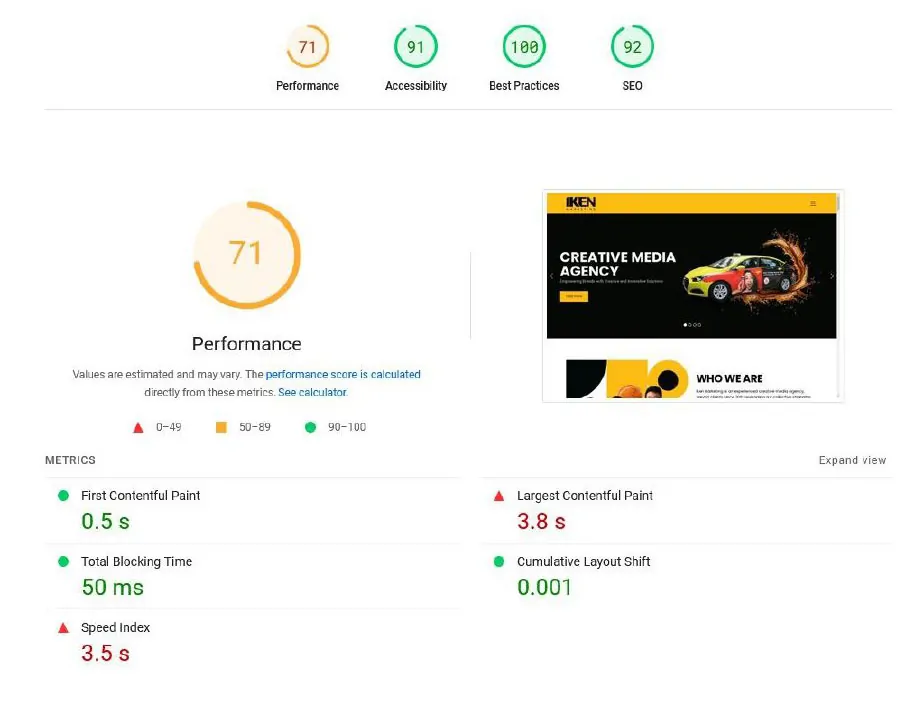
Case study: IkenMarketing.com
Before the fix, IkenMarketing.com was struggling on almost every technical front. A performance score of just 15 out of 100, a high total blocking time, and unstable layout shifts combined to make the site feel slow and unpredictable to use- the kind of experience that quietly costs a business both engagement and search rankings.
After running MIBC’s Free Website Audit, the fix covered speed optimisation through image compression, code minification, and script deferment; UX improvements to restructure the layout and reduce layout shift; SEO enhancements through better tagging and faster load times for improved indexing; and accessibility fixes that brought scores up to 91 and above.
Business outcome: a healthier, more reliable website that’s easier to maintain and better prepared for whatever comes next.
8. Marketing & Enquiry Experience
Your website is usually the place all your marketing eventually leads back to, whether that traffic comes from Google, social media, email, or paid ads. Once someone lands there, the site needs to make the next step obvious, whether that’s an enquiry form, a WhatsApp button, a chatbot, or a dedicated landing page.

Case study: Earthbody
Earthbody needed a site that worked properly no matter how a visitor arrived, so the rebuild started with a responsive theme and design optimised to behave consistently across every device and platform. On top of that foundation, we added an enquiry form and a WhatsApp button, giving visitors two straightforward ways to book appointments online without friction.
We also structured the services into clear categories, complete with price packages and promotions, and researched the frequently asked questions customers in this industry typically have, so the site could answer them upfront instead of leaving visitors to figure things out on their own.
Business outcome: marketing traffic has a clearer path toward meaningful customer action, from first click to booked appointment.
What Can You Achieve After a Website Revamp?
The most useful way to evaluate a website revamp is to connect each improvement to a business outcome.
| Revamp Improvement | Potential Business Outcome |
| Better website structure | Customers understand your offerings more easily |
| Clearer navigation | Visitors find relevant information faster |
| Improved mobile experience | Fewer mobile usability barriers |
| Stronger content and messaging | Clearer value proposition and customer understanding |
| Better trust signals | Greater confidence in your business |
| Stronger SEO foundation | Better foundation for search visibility |
| Improved technical performance | More reliable and efficient website experience |
| Better enquiry experience | Easier path from visitor to potential lead |

Website revamp projects rarely look the same from one business to the next, because the actual problem is rarely the same. One business might need a serious overhaul of navigation and content, another might already have strong content but be held back by technical issues under the hood, and a third might just need better landing pages to make the most of advertising traffic it’s already generating. What matters most always depends on the specific website and the business behind it, which is exactly why MIBC starts every revamp with audit, prioritise, improve, measure, so a business knows what actually needs attention, why it matters, and what a real improvement looks like before a single dollar gets spent on changes.
Closing
A website revamp should start with business questions, not design trends. What should customers understand faster? Which pages are hard to navigate? Where are mobile visitors hitting friction? Can search engines actually understand your services, and is your website ready to support the marketing campaigns you’re running? Can an interested visitor easily get in touch? These questions are what turn a revamp from a cosmetic refresh into a genuine business improvement project.
At MIBC, this starts with an audit, prioritise, improve, measure approach. We look at your website in the context of your actual business goals, budget, and urgency, then work out which improvements deserve attention first, rather than treating every website like it needs the same fixes. Before deciding what your website needs, the real starting point is understanding where the biggest opportunities actually are.
$799 Corporate Website Revamp
For businesses ready to move on from their existing website, MIBC’s $799 Corporate Website Revamp delivers a modern, mobile-responsive rebuild of up to 10 pages. It covers a modern layout and visual presentation, fully mobile-responsive design, reorganised information and navigation, and an enquiry form with a WhatsApp button built in, so visitors have a clear way to reach out from day one.
If you are unsure where to start, let us take a look at your website. Comment “REVAMP” below and share your website URL. Our team can help identify the areas that could be improved and recommend what to prioritise for your business.
Q&A: Website Revamp Questions Singapore SMEs Ask
What does a website revamp include?
A proper website revamp can include improvements to website structure, navigation, mobile experience, content, trust signals, SEO, technical performance, security and enquiry flow. The exact priorities should depend on the business and the problems identified during an audit.
How is a website revamp different from a new website?
A revamp focuses on improving an existing website and preserving useful assets where appropriate. A completely new website may be more suitable when the existing technology, structure, or business requirements make extensive changes impractical.
Can a website revamp improve SEO?
Yes. A revamp can strengthen the SEO foundation through better website structure, content organisation, headings, internal linking and technical improvements. However, SEO results depend on multiple factors and should be measured over time.
How long does a website revamp take?
The timeframe depends on the number of pages, complexity of the website, content requirements, technical work, and approval process. A simple corporate website and a complex business website should not be expected to follow the same timeline.
Does every website need a complete redesign?
No. Some websites may only need targeted improvements. Others may benefit from a broader revamp. An audit can help determine which areas should be prioritised before deciding how much work is necessary.